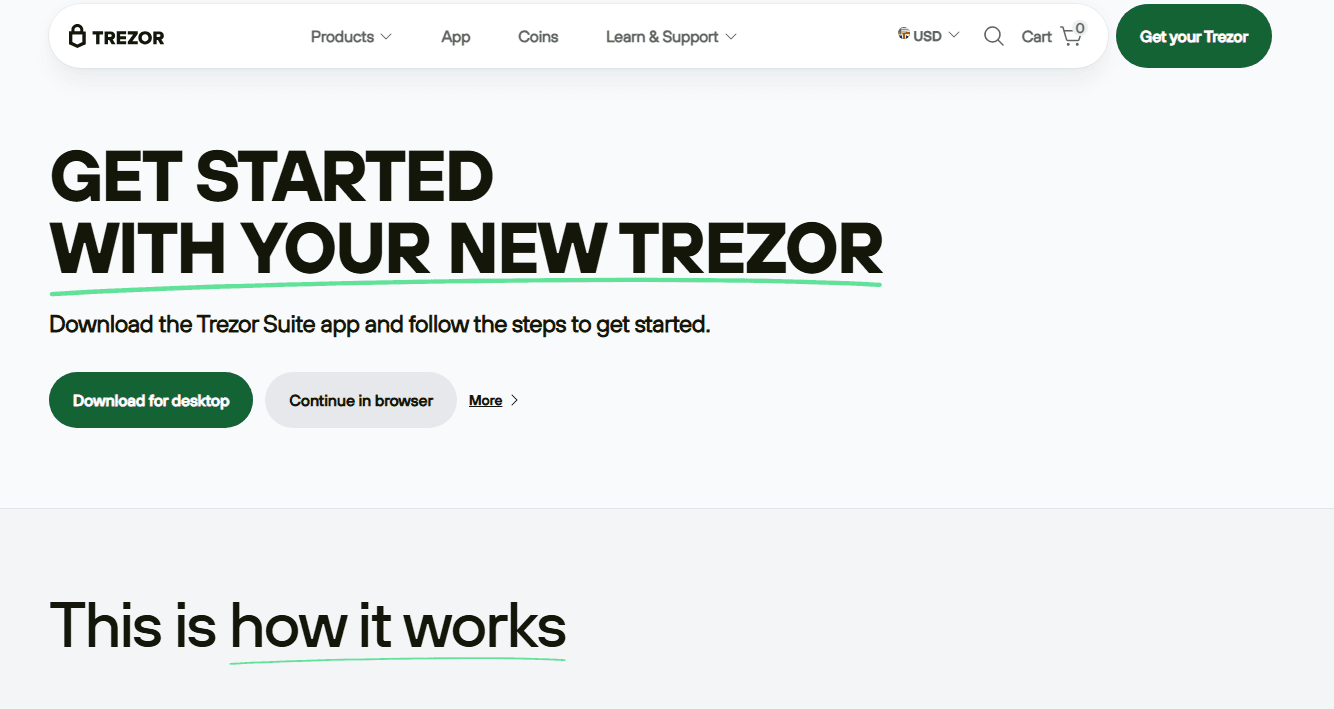
Trezor Suite – A Fresh 1200-Word Overview and Guide
Trezor Suite is the official software environment created to work alongside Trezor hardware wallets. It offers a streamlined interface for viewing, organizing, and managing digital-asset accounts while keeping private keys securely stored inside the hardware device. Designed with both clarity and safety in mind, Trezor Suite provides a structured environment where users can monitor their portfolios, adjust settings, and interact with their hardware wallet in a way that prioritizes offline protection and transparency.
This fully updated guide explains the key components of Trezor Suite, how it is structured, its core purpose, the philosophy behind its security model, and the features that make it an effective management platform for hardware-wallet users.
Understanding the Purpose of Trezor Suite
Trezor Suite is built to bridge the gap between offline key storage and everyday digital-asset management. The hardware wallet generates and protects private keys, while the Suite provides the interface that lets users view accounts, check activity, organize networks, and interact with the device safely.
Its main goals include:
Offering a clean, unified dashboard for viewing accounts
Providing secure communication between the computer and hardware wallet
Presenting a user-friendly environment suitable for different experience levels
Keeping all sensitive operations confined to the hardware device
Allowing customization of security options, appearance, and privacy settings
Trezor Suite does not store private keys. It functions only as a visual and interactive control panel.
The Structure of Trezor Suite
The Suite is thoughtfully organized into core sections that guide users through the different aspects of managing their hardware wallet.
Dashboard
The dashboard serves as the main hub. Here, users can see:
A consolidated overview of their digital-asset layout
A summary of account activity
Device connection status
Quick-access tools for navigation
The dashboard helps users orient themselves as soon as the application opens.
Accounts Section
This is one of the largest and most detailed sections within the Suite. It organizes accounts by network and allows users to see balances, logs, and historical data.
Each account includes:
Account name
Activity list
Connection indicators
Options for organization and categorization
Accounts can be added or managed based on the user’s personal preferences.
Device Tab
This section focuses on the physical Trezor hardware wallet. It includes options for:
Firmware checks
Security settings
Physical-device preferences
Display adjustments
Backup verification reminders
All critical actions here require physical confirmation on the hardware wallet itself.
Settings Menu
This area manages how Trezor Suite behaves. It includes:
Theme customization
Language selection
Local-data preferences
Notification controls
Privacy adjustments
These settings help tailor the Suite to the user’s personal environment.
The Security Philosophy Behind Trezor Suite
Trezor Suite follows a strict security model that aligns with Trezor’s long-standing principles:
Offline Isolation of Keys
All private keys remain inside the hardware device. They are never exposed to the Suite, the computer, or the internet.
Recovery Seed Protection
The recovery seed is shown only once during device initialization and only on the hardware device screen. Trezor Suite never displays or stores it.
Physical Confirmation for Sensitive Actions
When a user interacts with the Suite, any sensitive or critical operation must be approved on the hardware wallet itself. This prevents unauthorized or accidental actions.
End-to-End Communication Safety
Communication between the Trezor hardware device and the Suite is encrypted and designed to ensure data integrity during interaction.
Local Privacy Controls
Users can adjust settings that impact their privacy, including how the Suite handles local data, what information appears on the screen, and how the application connects to networks.
By keeping all sensitive components offline and requiring physical confirmation, the Suite maintains a strong defense against common digital threats.
User Interface and Navigation
Trezor Suite is built to be simple, comfortable, and accessible. Its design emphasizes clarity through:
Clean typography
A minimalistic layout
Intuitive menus
Helpful tooltips
Clear color cues
The interface adapts smoothly whether the user is a beginner or an experienced hardware-wallet owner. Information is presented in a structured way, avoiding clutter and unnecessary complexity.
Portfolio and Activity Visualization
One of the strongest features of Trezor Suite is its ability to present account information in a clear and organized format.
Portfolio Overview
The Suite summarizes asset distribution across networks to give users an understanding of the structure of their digital-asset holdings. This visualization is intended for organization and record-keeping, not for trading.
Activity Logs
Each account includes a timeline of its actions. This helps users keep track of:
Transaction history
Address usage
Network updates
General activity patterns
The goal is not speculation but rather transparent, organized account management.
Privacy Controls and Customization
Trezor Suite includes a range of privacy-oriented options that can be tailored to the user’s environment and comfort level.
Balance-Hide Mode
Users can hide displayed balances when sharing their screen or working in a public setting.
Local Data Handling
The Suite allows users to clear cached information stored on their device without affecting their hardware wallet.
Connection Preferences
Users may choose stricter or more flexible connection settings depending on their privacy needs.
Appearance Adjustments
Dark and light themes, along with additional visual preferences, let users customize the look and feel of the Suite.
These options enhance usability while giving individuals more control over how the software behaves.
Managing the Hardware Device Through Trezor Suite
The Suite plays a central role in keeping the device secure and up to date.
Firmware Monitoring
The Suite notifies users when a firmware update is available. Firmware updates enhance performance, security, and compatibility.
Backup Reminders
The software gently reminds users to verify their recovery seed backup. It never asks them to type it in.
PIN and Passphrase Options
Users can explore additional layers of security, though final actions always require confirmation on the hardware wallet.
Device Personalization
Users can label their device, adjust its screen settings, and manage operational preferences.
All of these features strengthen the connection between the Suite and the hardware wallet while preserving safety.
Accessibility and Multi-Platform Support
Trezor Suite supports major desktop operating systems and is continually improving compatibility across platforms. A mobile version also exists, allowing users to benefit from account viewing and basic management features on the go.
Importantly:
No cloud synchronization is used
No online accounts are required
Each installation operates independently
This design avoids exposing user data on external servers, reinforcing the offline-centric philosophy of Trezor.
Long-Term Maintenance and Best Practices
To maintain a smooth experience, Trezor Suite encourages safe habits:
Keeping software updated
Using secure computers
Avoiding exposure of sensitive recovery information
Double-checking device connection prompts
Managing local privacy settings periodically
These practices align with the principles behind hardware-wallet use and support a stable long-term experience.
Conclusion
Trezor Suite is an advanced yet accessible platform that complements the security of Trezor hardware wallets. By combining offline key storage with a clean, organized interface, it offers a protected environment for viewing accounts, tracking activity, managing device settings, and customizing the user experience. Its design reflects a careful balance between functionality and safety, ensuring that every interaction remains secure, transparent, and under the user’s direct control.
Whether someone uses Trezor for long-term holdings, account organization, or general digital-asset tracking, Trezor Suite plays a central role in creating a smooth, secure, and reliable ecosystem around the hardware device.